The students of Standard VI welcome Belize's Governor-General and Head of State, Sir Colville Young to St. Andrew's School by reciting some classic Kriol proverbs. See if you can pick out their meaning!
Ole Heg
Ole Heg is a character that lives in the skin of a haggard old woman. She comes out at night to suck on the blood of innocents. The trick is to throw wangla seeds at her door so that she is so busy counting them she fails to realize that sunrise will catch her out of her skin. You must find her skin and salt it so that when she returns she can not re-enter it; Salt will sting her flesh and she will chant in desperation "Skinny, skinny, yuh no know mi?"
" You picny now of disyer time,
"You hab it good an fine;
"You run about and play da night,
" Sometime till eight an nine;
"Wen I mi leel an stan like you,
"No night could see me out:
" Espece'y wen I hear dem talk,
" Dat 'Ole Heg ' is about!
-Granny's Stories ( No.1) Hag - J.S. Martinez
Belize’s Finados and Folklore Legends
The young nation of Belize has been made home by a diverse spectrum of people and cultures, all with their own beliefs and practices. As you can imagine having so many different people with different lore will lead to some interesting, albeit creepy urban legends and children’s stories. Check out these Belize Legends right out from the creepy archives.
Check out these creepiest creatures sure to keep you home on Halloween:
1 Imps – Duenditos and el Tata Duende
Duendes are common mythological goblin-like creatures that inhabit the campfire story ears of numerous peoples. Iberia, Latin America, and the Philipines all share tales of these forest imps, sometimes as benevolent�fairies but more often as malignant apparitions. Duenditos are generally thought to be forest spirits who help lost travelers find their way home, and in Mexico, they live in your home walls and try to clip unkempt children’s toenails – but often fail and clip the entire toe! El Tata Duende, however, is a much more sinister figure, referred to as the “Grandfather Demon” by the Mayan inhabitants of this land. El Tata Duende had a tendency to prey on children by luring them into the forest and the stealing them (go figure!). Children were also told never to play marbles at night or they’d attract him – after he steals you he takes your thumbs. While it’s unclear what he did with all those kiddy thumbs it’s an unnerving thought that an ugly little troll would take a part of you away.
He was (is?) also a general mischief maker who loves playing the guitar and riding horses. Traces of him could be seen in the braids he’d leave in a horse’s mane after a night of galloping around your land on your horse making a commotion. Luckily for the troubled townsfolk, he isn’t invincible, nor too intelligent for that matter; he could be fooled by children who bend their thumbs behind their palms and show him, El Tata Duende will mistake you for one his smaller cousin and let you go free. If he keeps bothering your horses you can set up a guitar, and a bottle of rum on a still beside a mirror – the theory goes that he will play the guitar and get drunk then look in the mirror and permanently scare himself away!
Taata Duendes (Nukuch Tat) Part 1
The Taata Duendes also known as Nukuch Tat or Yuum Balamo'ob between the Yucatec Maya people . The video is made in the perspective of the Maya Yucatec people of Belize on the Taata Duendes (Nukuch Tat) . information by Nojoch m�ak Andy Chuc .
Taata Duendes (Nukuch Tat) Part 2
2 Phantoms – Stone Woman and La Llorona
Goblins and imps while scary are quite avoidable – simply stay away from the forest, don’t be a child (literally) and don’t play marbles in Central America at night. Phantoms, however, are decidedly creepier, how do you avoid something you can’t even see? Well, that’s their game because you can’t. You can avoid locales that are rumored to be haunted but where is the fun in that? Cue up Xunantunich. The name literally translates to “Stone Woman”, a name begotten not from Mayan Symbolism or structural design but from the legend of a ghost that inhabits the site. The stone woman is clad completely in white, has fiery red eyes and typically appears in front of El Castillo to ascend the stairs and disappears into a wall near the top.
La Llorona, on the other hand,�doesn’t mind her own business like the Stone Woman. La Llorona is said to be the spirit of a woman named Maria who drowned her children in the river as a sort of lovers revenge. After realizing that her little ones were dead she drowned herself. Maria was challenged on the whereabouts of her children at the gates of heaven and denied entry until she could locate them. Since then La Llorona wanders the river banks at night mourning the loss of her children by weeping and asking them for forgiveness by stealing living ones to drown to take their place. The tale of the Llorona is used by parents in Latin America to discourage their children from wandering out at night (maybe that’s why we don’t like the dark).
3 Hellhound – El Cadejo
El Cadejo comes in two flavors that vary in characteristics from region to region in Latin America. In Belize, the ironic version generally takes hold in which the white Cadejo (El Cadejo Blanco) is the evil one and tries to fool you with its appearance while the black Cadejo (El Cadejo Negro) is the benevolent one who guards drunks and vagabonds by night. El Cadejo usually refers to the evil one – whichever that may be in the town you’re in – and is described as a large dog like creature that isn’t exactly a dog. This creature can sometimes appear as large as a cow, has a dog-shaped body with goat-like hooves and glowing red eyes. Perhaps the inspiration for Cujo? El Cadejo can be considered a force of chaotic good for he appears to alcoholics who stagger through town in the wee hours. Its presence is made known by a strong “goat smell” in his proximity and the sound of chains dragging on the ground. Legends warn you not to speak to El Cadejo for speaking to it induces madness, as well, don’t turn your back to it as that has the same effect. Inversely if you have just been caught in the wrong part of town at the wrong hour El Cadejo’s counterpart – Black or white depending�on the version you heard – will guide you home safely warding off his evil twin and any other harm that may have befallen you otherwise. Surely the better dog-goat to come across in any situation!
4�Polymorphs – X’tabay
What’s scarier than ghosts that hang out near your favorite swimming spots? Yup, a shapeshifting something hiding behind a tree. Lurking near the thorny trunk of your local Ceiba tree; is the X’tabay a shapeshifting creature right out from the deepest darkest Mayan imagination. The purpose of this monster? Seducing and murdering unsuspecting men – why does it always have to end with murder? Oh well… The X’tabay is said to be the spirit of a Maya Woman who was pure of flesh but cold-hearted, who envied the good nature of a local prostitute, Xkeban. After the death of Xkeban, Utz-colel was appalled by the sweet aroma of the corpse and the beautiful flowers that grew at her grave, jealously proclaiming that her scent would be sweeter and the flowers more beautiful. After her death, Utz-colel clung to an unbearable smell that came through even her grave and only spiny cacti grew above it. Enraged by this her soul called on dark spirits to bring her back to earth whenever she liked to perpetrate her twisted crime of envy on the local men in the form of how Xkeban was in life.
The X’tabay will appear to you under a ceiba tree in the form of a beautiful woman, sometimes as someone you know and/or are infatuated with and comb her hair until your attention is gotten. After which she will quickly get down and dirty with you, then kill you. Ladies, you are safe from this one, but do keep and eye on your significant others – for safety’s sake.
Other urban legends surrounding her tell of a horse faced monster who disguises itself as a woman and other equally chilling options for appearance.
5�Missing link – Sisitmito
This one seems to perhaps stem from a primordial urge to explain the gap between apes and humans – the concept of a missing link, part man part ape exists universally among people and in latin America takes on the name Sisimito. Good luck finding that word in any dictionary, it has no real English translation. Described as a hairy ape with a humanoid head the Sisimito is a jungle dweller who follows around anyone who happens across densely forested areas, or hunters who stray afar on religious holidays. The Sisimito has no thumbs, backward feet (maybe he had a run in with el Tata Duende) and feasts on raw meat including people.
The sisimito is another oddly sexist monster in that if a man looks into his/its eyes, the man shall die within one month, but a woman catching a glimpse of a sisimito will her have her life prolonged. The Maya believe that due to deforestation their patron god of the forest has taken the Sisimito into the densest tracts of forest leading to the rarity of seeing one today. If you do encounter one, however, there are ways to combat him; walking around in a circle will confuse him and stray him from your tracks, or making tracks through a bush will have the same effect.
If you intent to permanently get rid of him he’s said to be especially susceptible to his long hair being set ablaze – gruesome. The Sisimito is also afraid of otters and will avoid them at all costs, so we’re sure you can get creative with that!
Legends of Belize: Paranormal, Cryptid, and Ghost Stories!
Two Dead Explorer fans invited me to discover the cryptozoologial, paranormal, supernatural, and unexplained creatures and stories that haunt Belize! They sent me an autographed copy of their new book Legends of Belize. In Belize, Central America, there are terrifying stories about strange creatures such as the jungle gnome called Tata Duende who has backwards feet, rips thumbs off, and has magical powers or the beautiful but deadly seductress named Xtabai who steals souls and shape-shifts into animals, people, and even someone you know. Stories of these creatures and many more are so terrifying, they are past down from generation to generation as folklore and legends. The ancient legends are captured, documented, and preserved by Belizean Artists and Animators, GrissyG and Dismas, in a comprehensive series and book with images of fine art, information about the creatures, a compare and contrast of Belizean myths with other myths around the world, description of the art process, and Belizean cultural iconography that inspired the series. This a great book about the mythical creatures that dwell in the jungles and water of Belize! I am grateful for the gift. Please support them if you can!
Xtabai
As Belizeans, we are very superstitious people, and so is the rest of the Caribbean. All areas of Mesoamerica have their own traditional folktales and legends, and within the Maya territory, there are numerous characters and stories. Xtabai is what many would consider to be the most malevolent of them all. The very mention of her name is enough to bring chills to someone's entire body. The character is not fully understood, which brings even more mystery to its motives and is best described as a demon.
It was never alive. It was never a person that lived her life and after death failed to find her path to the afterlife. This is a demon that takes the form of a beautiful woman and manifests itself near the mouth of a cave at the base of the Ceiba tree, the sacred tree of the Ancient Maya. This woman is described having long beautiful hair, and wears a traditional white maya dress that is long enough to cover her feet. This entity appears only to men and may take the form of one's wife or girlfriend, or simply someone that the man knows. Doing this puts the man into a spell. The man will try to catch up with her, but the entity will always be a few steps ahead. It will eventually lead the man to a cave, and if he enters, he will never be heard of again. The only way to break the spell is to look at her feet as she has giant bird feet that she tries to hide with her gown. Seeing that will snap the man out of the spell and he will be able to run away.
Maya women traditionally wear a huipil. They have been wearing this garment from before the Spanish arrival. It is worn by groups living in the Yucatan and Campeche states. The Maya living in highland Guatemala also wear their own traditional huipil. The huipil worn today is a variation that incorporates design features from other Mexican regions, and even from Europe. In all stories of Xtabai, the white dress plays a main role, and so is the act of hiding her feet. There are many styles of huipils throughout Mesoamerica, but there is only one style that actually covers the feet and is worn by the Mestizo from Yucatan. We know that during the Castle War of 1840, many people fled Yucatan and came south, into Belize and Guatemala. There is a very high chance that then is when the folktales made it into this area. If that is so, then Xtabai is of Mestizo origin and the character is wearing a Yucatan huipil.
When the ancient Maya first accessed caves, they were afraid of going inside. Caving archaeologists find the oldest pots at the mouth of the cave and the newer pots are found deeper into it, giving us reason to believe that the Maya became braver as time progressed. They described the cave entrance as the entrance to the afterlife, a place of eternal rest and a place of fright. The Popul Vuh is a mythological story about two boys that descended into the underworld and described a place where many death gods reside.
Xtabai is a mixture between Yucatec culture and ancient Maya belief. She is a demon that manifests itself in front of a cave, a place that also has connections with an evil underworld. She appears at the base of a Ceiba tree, thus desecrating a sacred symbol and giving us an insight that this character has no respect for this world's ideology and is altogether evil. Today the tradtion lives on people gathered around a camp fire or around in their homes telling scary stories to scare children and adults alike.
An alux or "Aluxo'ob " in plural is the name given to a type of spirit in the mythological tradition of certain Maya peoples from the Yucat�n Peninsula and Belize. Aluxo'ob are good spirits, conceived of as being small, only about knee-high, and in appearance resembling miniature traditionally dressed Maya people. Tradition holds that aluxob are generally invisible but are able to assume physical form for purposes of communicating with and frightening humans as well as to congregate.
They are generally associated with natural features such as forests, caves, stones, and fields but can also be enticed to move somewhere through offerings. Many Mayas make offerings to the Aluxo'ob to protect their milpas .Some Maya believe that the Aluxob are called into being when a farmer builds a little house on his property, most often in a maize field (milpa). For seven years, the alux will help the corn grow, summon rain and patrol the fields at night, whistling to scare off predators or crop thieves.
At the end of seven years, the farmer must close the windows and doors of the little house, sealing the alux inside. If this is not done, the alux will run wild and start playing tricks on people.Some contemporary Maya even consider the single- and double-story shrines that dot the countryside to be kahtal alux, the "houses of the alux" (although their true origins and purpose are unknown).
Stories say that they will occasionally stop and ask farmers or travellers for an offering. If they refuse, the aluxes will often wreak havoc and spread illness. However, if their conditions are met, it is thought the alux will protect a person from thieves or even bring them good luck. If they are treated with respect, they can be very helpful.
It is believed that it is not good to name them aloud, as it will summon a disgruntled alux from its home.
Xtabai is a well-known myth created by the Maya ancestors. She is said to be a beautiful young girl who has long straight black hair. The Xtabai, according to the ancestors, has her feet like that of a bird. She only appears to people that wonder in dark places near the bush and late at night. The Xtabai only calls to men, usually drunk men. She takes them to the bush and sometimes kills them or only hurts them and leaves them with pain in the midst of the bush. The Xtabai then turns herself into a tree of prickles or into a snake.
Nukux Tat or The Tata Duende
is a goblin of folklore of Belize. The Tata Duende is a famous folklore common to the Yucatec Maya(Maya Mestizo) culture . In Yucatec Maya is known as 'Nukux Tat' , The name Tata is a maya word meaning "grandfather" and Duende is spanish for"Goblin" also known as "el Dueno del monte" considered as a powerful spirit that protects animals and the jungle.
Many Yucatec Maya ask permission to the Nukux Tat before entering the Bush or before entering to hunt.
Some Yucatec Maya in Belize perform a Primicia Called Jetz lu'um its done for the prosperity of the land . Also during that offering they ask the Nukux Tat(Los Duenos del monte) protection from Mal Aire(Bad Breeze) which is believe to damage the land and those who inhabit them including Humans and animals.
The Tata Duende is generally described as being of small stature that has a size of about 1.2 m high, has a beard, is wrinkled, lacks thumbs, has his feet backwards, and wears a large brimmed hat.
He is characterized as a very short but very strong man with his feet pointing backwards.
Huay K'ek'een is the Bruja/brujo who transform him/herself into a huge pig,who violently chase People and dogs and to do mischievous acts. The Huay K'ek'een is a story many of us especially in the villages of northern Belize grew hearing from our Grand parents and parents.
NOTE: The Hauy K'ek'een is a common legand between the Yucatec Mayas of Northern Belize and the Yucatan Peninsula.
Our Maya Tatitos from the villages of Northern Belize used to tell us the story of the Huay K'eek'en. They said that the Huay K'eek'en is a Brujo/Bruja who transform him/herself into a huge pig with red eyes to do mischief acts at night. The Huay K'eek'en is a story many of us especially in the villages of Corozal and Orange Walk grew hearing from our Grand parents and parents. Huay or Uay comes from Waay in Yucatec Maya, meaning sorcerer"
hechicero" and the K'eek'en means "Pig" in Yucatec Maya.
The Huay Peek' is the Brujo who transform him/herself into a huge dog . It is known that Huay Peek' is a large black dog who may appear in houses to scare people , destroy property and even profanate tombs in the cementary . Also known to attack domestic animals .
When the Huay Peek' roam in the streets the dogs bark in a disperate manner . The word Huay in Yucatec Maya means "Brujo" and Peek' means Dog . The stories of the Huay Peek' are heard in Northern Belize but not as common as the Xtabai,Huay K'eek'en,Alux and Nukux Tat(Tata Duende) .
Quetzalcoatl (Kukulkan) the Man the prophet, a Revered King Shaman which taught love and abolished human sacrifice. Some people of the Mormon religion believe the man Quetzalcoatl was actually Jesus returning this time to the American natives.
Most cultures had prophets but did our people had one ? yes we did and his name is Quetzalcoatl known to us Yucatec Maya as Kukulkan. The cult of Kukulkan/Quetzalcoatl was the first Mesoamerican religion to transcend the old Classic Period linguistic and ethnic divisions. This cult facilitated communication and peaceful trade among peoples of many different social and ethnic backgrounds. Although the cult was originally centred on the ancient city of Chich�n Itz� in the modern Mexican state of Yucat�n, it spread as far as the Guatemalan highlands.
The historical Quetzalcoatl - was probably born around AD 947. His father, Mixcoatl, was ruler of the Toltecs. He was originally named Ce Acatl Topitzin, meaning "Our Prince Born on Ce Acatl," the latter being an important Toltec holiday. His birth was immediately preceded by a horrendous family tragedy, the father having been deposed and murdered by a jealous brother named Ihuitmal.
The unborn child's pregnant mother, Chimalma, fled to Tepoztlan. Before dying in childbirth, Chimalma declared that her infant son was divinely conceived because she had swallowed a piece of blue-green jade.
Reared by his grandparents, Ce Acatl Topitzin was sent to the religious school at Xochicalco. There he so impressed teachers with his wisdom and piety that they conferred on him the name of Quetzalcoatl. Meaning "plumed serpent," this was a prestigious title given to persons whose behavior shows signs of an exalted state such as that attained by a saint or a sage.
Returning to Tula, Quetzalcoatl defied his usurping uncle by burying the remains of his father with the ceremony to which he was entitled. He then took over as new leader of the Toltecs by pushing the unpopular Ihuitmal into a sacrificial fire.
Quetzalcoatl proved to be a wise and progressive ruler. In an action that demonstrated both sensitivity and enlightened self-interest, he imported a group of talented deaf-mutes known as nonoalcos to work as artisans in his kingdom.
The nonoalcos were descendants of the highly skilled artisans of Teotihuacan and it was they who produced the distinctive designs for which Tula is noted - serpent columns, square pillars ornamented with friezes and giant-sized statues of warriors.
Quetzalcoatl also abolished human sacrifice and decreed that henceforth sacrificial objects be limited to snakes, flowers and small birds. It's at this point that the line becomes blurred between the historical and the legendary Quetzalcoatl.
Though the priests were undoubtedly annoyed by his outlawing of human sacrifice, accounts of the actions attributed to them are obviously the work of myth makers rather than of responsible historians.
According to this version, the priests summoned an ancient god named Texcatlipoca to help them get rid of Quetzalcoatl. Texcatlipoca was an evil god, and he and the pro-human sacrifice priests obviously looked on Quetzalcoatl as some sort of bleeding-heart liberal. (The only bleeding hearts they wanted to see were the ones torn out of victims and laid on altars.)
Deciding on a ruse, Texcatlipoca crept into Quetzalcoatl's sanctuary with two minor gods, also evil, and frightened him by demonstrating a new invention: the mirror. Feigning friendliness, they disguised him by covering his body with red paint, feathers and a mask.
They served him a delicious meal and Texcatlipoca persuaded Quetzalcoatl to drink a beverage of pulque mixed with honey. The concoction made him drunk and the conspirators then slipped a beautiful dancing girl into his room. He awoke the next morning with a hangover and the horrible realization that he had broken his priestly vow of chastity.
Tormented with remorse, Quetzalcoatl wandered in self-imposed exile for twenty years and then ended up near what is today the Gulf port of Coatzocoalcos.
There he said goodbye to a loyal band of weeping disciples, promising to return at some future time.
He sailed for Yucatan, where he became equally admired by the Maya, who called him Kukulkan. Finally, some thirty years later, he died by immolating himself on a self-made funeral pyre.
He promised that he will return and bring back glory to his people.
If you are in the jungle and come across poison ivy, look around there will be a gumbolimbo tree nearby. It is the most effective antidote to the poison ivy (che chem). It is also a treatment for poison wood.
So why do these trees always grow near each other? According to the Maya legend, two great warriors were brothers, but of entirely different personalities. One, Kinich, was kind and loving while his older brother, Tizic, was hateful and angry. Both fell in love with the same maiden, the beautiful Nicte-Ha. T hey declared a battle to the death to determine who would have her.
A terrible battle raged on, the moon hid, and black clouds filled the skies as the earth was torn apart and the heavens went into hiding. Eventually the brothers both died in each other's arms.
In the afterlife, they begged for forgiveness and asked to return to the world of the living to see Nicte-Ha again. The gods granted their wish and the brother Tizic was reborn as the Chechen Tree which burns and blisters anyone who touches it. The loving brother, Kinich, was reborn as the Chaca tree, which neutralizes the venom of the Chechen. They both watch over Nicte-Ha who was reborn as a beautiful white flower.
There is a slightly different version of this Mayan legend, and it goes like this: Yes there were two brother gods. And yes, one was good and one was bad. But eventually the bad one was so bad that he was turned into a tree so that he could do humans no more harm. But even as a tree Chechem figured out how to keep harming people by turning his sap into poison. And at this point, his good brother Chac� who was still a God, VOLUNTEERED to be turned into a tree so he could help heal all the people Chechem was harming. And so it was. Chaca is the medicine for Chechem. As an added bonus Chechem dies easily from even being too close to the fires of milpas. Chac� on the other hand is virtually immortal. You can stick a piece of it in the ground and it grows instantly into a new tree so humans plant it everywhere as fence posts and there it thrives. It pays to be good.
ALUX IN THE VILLAGE OF SAN LAZARO IN ORANGE WALK FOR EL FESTIVAL DEL PUEBLO 2017
Belizean Maya Folklore : ALUXO'OB THE GUARDIANS OF THE MILPAS
Alux(singular),Aluxo'ob(Plural)
An Alux or "Aluxo'ob " in plural is the name given to a type of spirit in the mythological tradition of certain Maya peoples from the Yucat�n Peninsula and Belize. Aluxo'ob are good spirits, conceived of as being small, only about knee-high, and in appearance resembling miniature traditionally dressed Maya people. Tradition holds that aluxob are generally invisible but are able to assume physical form for purposes of communicating with and frightening humans as well as to congregate. They are generally associated with natural features such as forests, caves, stones, and fields but can also be enticed to move somewhere through offerings. Many Mayas make offerings to the Aluxo'ob to protect their milpas .Some Maya believe that the Aluxob are called into being when a farmer builds a little house on his property, most often in a maize field (milpa). For seven years, the alux will help the corn grow, summon rain and patrol the fields at night, whistling to scare off predators or crop thieves. At the end of seven years, the farmer must close the windows and doors of the little house, sealing the alux inside. If this is not done, the alux will run wild and start playing tricks on people. Some contemporary Maya even consider the single- and double-story shrines that dot the countryside to be kahtal alux, the "houses of the alux" (although their true origins and purpose are unknown).Stories say that they will occasionally stop and ask farmers or travellers for an offering. If they refuse, the aluxes will often wreak havoc and spread illness. However, if their conditions are met, it is thought the alux will protect a person from thieves or even bring them good luck. If they are treated with respect, they can be very helpful.
It is believed that it is not good to name them aloud, as it will summon a disgruntled alux from its home.
The ALUX is a dominant character among the Yucatec Maya in Belize and their stories are still heard mainly in villages such as San Antonio and San Jose Succotz in the Cayo District and San Victor,San Narciso , Patchakan, Progresso, and Xaibe in the Corozal district and San Pablo/San Jose in the Orange Walk District . Stories of Aluxoob are told at Ambergris Caye as well.
The Huay Chivo is a legendary Mayan beast. It is a half-man, half-beast creature, with burning red eyes, and is specific to the Yucat�n Peninsula. It is often said[by whom?] to be an evil sorcerer who can transform himself into a supernatural animal, usually a goat, dog or deer, in order to prey upon livestock. In recent times, it has become associated with the chupacabras. The Huay Chivo is specific to the Yucat�n peninsula . It is believe the Huay Chivo is an evil sorcerer that is capable of transforming into a goat to do mischief and eat livestock.
The name Huay Chivo combines Spanish and Yucatec Mayan terms. Huay or Uay comes from Waay in Yucatec Maya, meaning sorcerer, spirit or animal familiar, while Chivo is Spanish for goat, literally meaning sorcerer-goat; it is also known as the Chivo Brujo, an entirely Spanish phrase meaning the same thing.
Huay Miis (Belizean Legend) by Felicita Cantun
Felicita Cantun is a Yucatec Maya from Yo Creek village Orange Walk.
The opinions and views expressed on this board are the subjective opinions of Ambergris Caye Message Board members and not of the Ambergris Caye Message Board its affiliates, or its employees.


 AmbergrisCaye.com


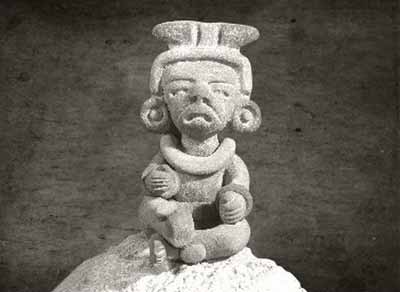


 The Huay Chivo is a legendary Mayan beast. It is a half-man, half-beast creature, with burning red eyes, and is specific to the Yucat�n Peninsula. It is often said[by whom?] to be an evil sorcerer who can transform himself into a supernatural animal, usually a goat, dog or deer, in order to prey upon livestock. In recent times, it has become associated with the chupacabras. The Huay Chivo is specific to the Yucat�n peninsula . It is believe the Huay Chivo is an evil sorcerer that is capable of transforming into a goat to do mischief and eat livestock.